Baby Doll Legs from The Cottage Vineyard and Winery in Cleveland, Georgia.
Rosé of Blanc du Bois
Blanc du Bois is a Hybrid grape cultivar developed at the University of Florida.
Blanc du Bois wines can be difficult to achieve a commercially acceptable clarity and is therefore often used in blends. We suspect this wine was lightly blended with small percentages of estate grown Syrah and Merlot.
Non-vintage.
Brownish orange in color. Shows long thick legs legs more expected of a red wine.
Aromas of pink lemonade, orange, lemon zest, and honeysuckle.
Semi-sweet with a moderate mouthfeel, notes of citrus explode prominently on the palate, pink grapefruit, orange, tangerine, pink lemonade, and finishing with a subtle woodsy tone and hints of vanilla ice cream and can pears.
13% ABV
Produced under the consultation of iconic North Georgia winemaker Joe Smith. Nathan Beasley is the assistant winemaker learning as an apprentice under Joe’s tutelage.
The Cottage Vineyard and Winery sits atop a North Georgia mountain offering stunning views.
Flat Rock, North Carolina— JenNis Beverage Marketing organized the inaugural North Carolina Mead-Cider-Fruit Wine Competition.
The competition announces twenty-seven medals, three people’s choice winners, and a Best in Show each in Mead, Cider, and Fruit Wine.
A panel of nine highly qualified judges evaluated the entries by blind tasting, six professional and three amateur judges.
The goal of the North Carolina Mead-Cider-Fruit Wine Competition is to increase awareness of North Carolina’s commercially licensed producers of mead, cider, and fruit wines.
The event is sponsored by The North Carolina Wine and Grape Council, Custom Chauffeured Wine and Beer tour company @Van in Black, NC Beverage Attorneys group @Beer Law Center based in Raleigh, and local wine blog @WineryEscapades.Com.
Judging was held May 24th at the elegant mountain resort The Lodge At Flat Rock just off Interstate 26 in Flat Rock, North Carolina.
Best in Show Mead: Dark Horse – Moonjoy Meadery, Lenoir
Best in Show Cider: Stayman – GoodRoad CiderWorks, Charlotte
Best in Show Fruit Wine: Blackberry – Twisted Vine Winery, Lenoir
🏆🏆🏆
People’s Choice Mead: Autumn – Keeper’s Cut Meadery, Marion
People’s Choice Cider: Area 61 – Twisted Vine Winery, Lenoir
People’s Choice Fruit Wine: Blackberry – Parkers-Binn Vineyards, Mill Spring
The NC Fine Wines Competition promotes the state’s vinifera and hybrid wines, The North Carolina Muscadine Association promotes the state’s muscadine wine producers. We wanted to create an event to promote and raise awareness of North Carolina commercially produced Meads, Ciders, and Fruit Wines.
Quote 2 from Jenni Turner
We are very pleased with the overall execution of the event, we loved the venue, and we are thrilled with the quality of judges for our inaugural MCF. We hope through our persistence and marketing efforts to generate greater overall participation in the years to come, especially in the Fruit Wine category.
Predominantly Merlot and Syrah, with much smaller percentages of Cabernet Sauvignon, Pinot Noir, Zinfandel, Cabernet Franc, Petit Verdot, Mourvèdre, and Grenache.
Medium purple in color.
Medium nose of black plum, blackcurrant, chocolate covered cherries, blackberry jam, and lavender, and vanilla.
Medium bodied, medium acidity, with medium tannins and medium-high alcohol.
Off dry and smooth.
Medium intensity flavor notes of black plum, blackberry jam, black cherry, blueberry, cocoa, blackcurrant, fading toward a medium finish of vanilla bean, dark chocolate, graphite, cigar box, mushroom, and black pepper
13.6% ABV.
Honestly at the price, this wine is an excellent choice.
Wines in North Carolina are typically produced for immediate consumption. Though we certainly know some will cellar well for up to 8-10 years!
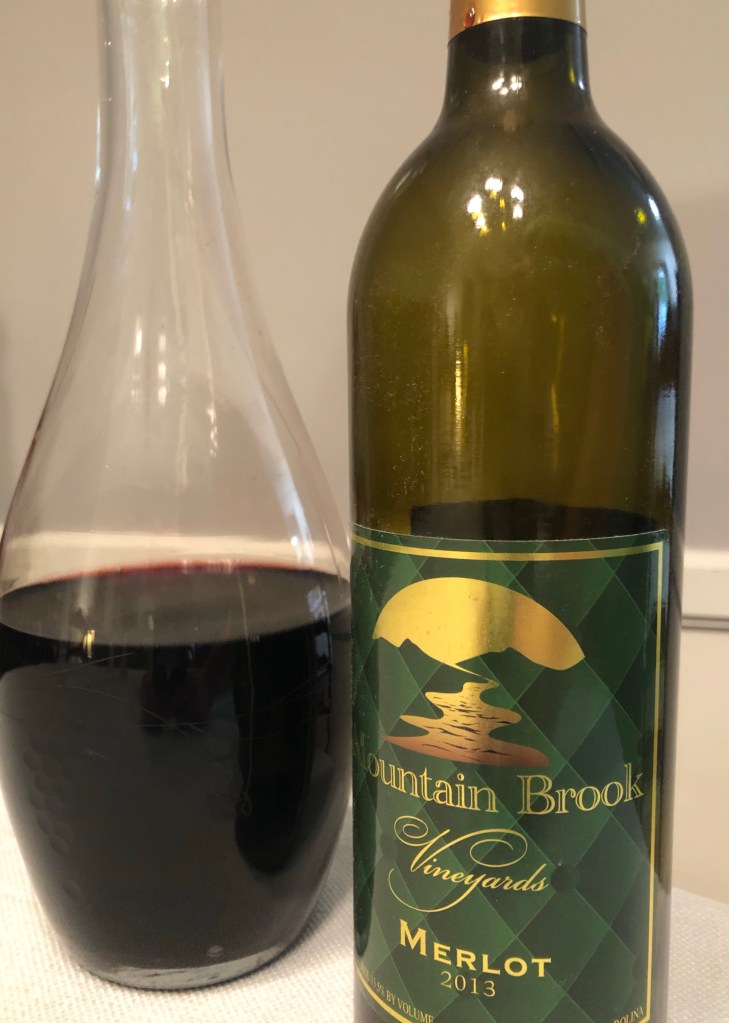
So with this 8 year old Merlot, there was naturally some concern. Well rest assured, this wine has held up remarkably well.
Amazingly, this Merlot is very clean, as we observed very little settlement when decanting.
Decanted for 60 minutes and it really opened up on the nose!
Deep ruby in color.
Medium nose of red plum, cherry, fennel, and cedar, caramel, and charred wood.
Medium body, medium acidity, with medium-light tannins.
Medium flavor profile of red plum, red cherry, dried cranberry, softening mid-palate with hints of caramel, mocha, and black licorice.
Medium short finish reminiscent of a Tootsie Roll and a Werther’s Original Caramel Hard Candy.
This 2013 North Carolina Merlot is still drinking very well considering it’s age.
We consider this vintage will gracefully age for an additional two or three years if properly cellared. Therefore, if still available at the winery, we’d continue to recommend picking up a bottle.
13.5% ABV
$28 per bottle.
We opened this bottle as a special Mother’s Day treat and it most certainly did not disappoint!
“Um, I do drink red wine,” says David. “But I also drink white wine. And I’ve been known to sample the occasional rosé. And a couple summers back, I tried a Merlot that used to be a Chardonnay, which got a bit complicated… I like the wine and not the label. Does that make sense?” – Shitt’s Creek
Our research of wine industry history in the Tryon Foothills has bought many unique findings.
However, perhaps the most interesting is the one winery that produced a Red Chardonnay wine!
The amazing story of Green Creek Winery’s 2007 Chardonnay Rosso!
Our research also came across an article from a well known wine website, one which in no uncertain terms explained that red wine could not be produced from white wine grapes. Well, never say never!
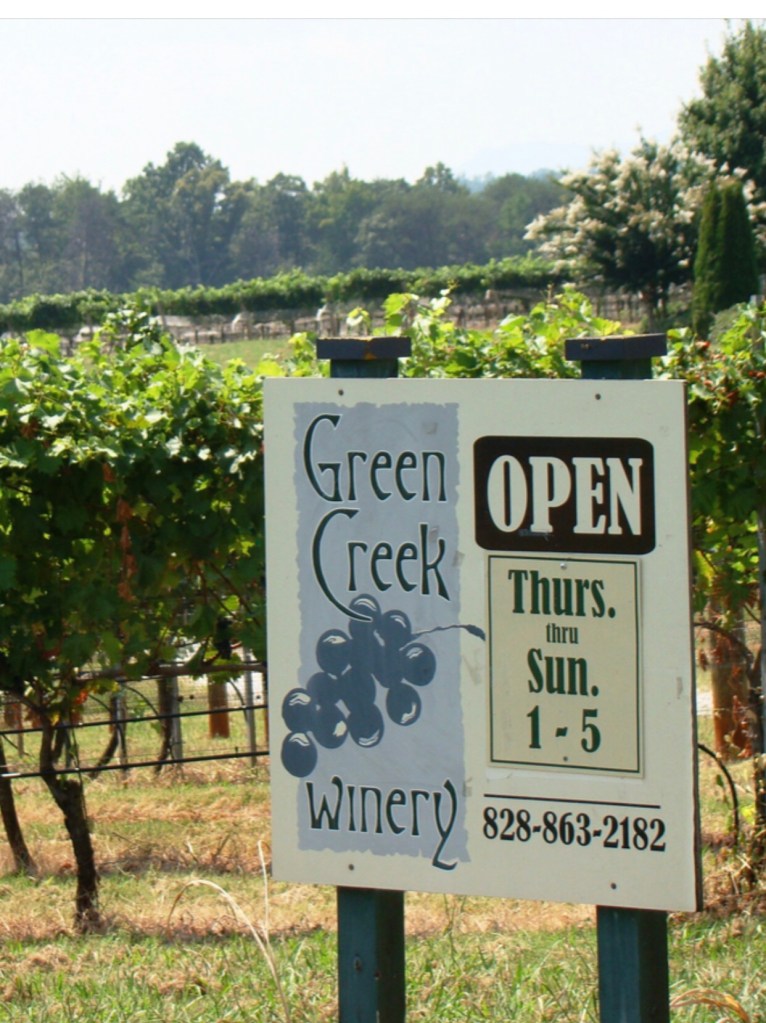
Green Creek Winery was established by Alvin Pack in 2005. The eight acre vineyard and winery was located in the Green Creek community of Polk County. The winery closed around 2018.
However, in 2007 the winery made a huge splash with it’s Chardonnay Rosso!
That right! A red Chardonnay!
…and by splash, we mean national and international news!
First, let’s explore the process. How in the world do you get red wine from a white grape!
We should note that Green Creek Winery grew both Chardonnay and Chambourcin fruit. In fact, the vineyards are still nurtured and harvested by Russian Chapel Hills Winery.
In white wine production, the fruit is pressed and the juice is drained off the skins. In red wine production, the juice is left to macerate on the skins in order to extract color.
See, the juice from most grapes, red skinned or white skinned, is pretty much colorless. Meaning the color of Merlot wine is derived from the process of allowing the pressed juice to soak on the fruit’s red skins!
However the red skinned Chambourcin is a type of grape called a teinturier! Meaning it’s juice is uncommonly naturally red-tinged. Therefore the Chambourcin juice doesn’t require to macerate on the skins to extract it’s color.
According to Pack, the process to produce the Chardonnay Rosso is a reverse of a Rosé process. In producing a Rosé wine, the juice from a pressed red grape is quickly drained after only limited skin contact. Thereby extracting much less color.
In producing the Chardonnay Rosso, both the estate grown Chardonnay and Chambourcin fruit was pressed and drained from the skins.
The Chardonnay juice is then macerated on the Chambourcin skins and the temperature is dropped to just above freezing. This process allows for juice to extract the color but not the other characteristics of a red wine.
The temperature is raised and the juice is drained from the skins prior to fermentation. This process provides a 100% Chardonnay wine that is red in color.
After fermentation, the wine was aged six months in Hungarian oak barrels.
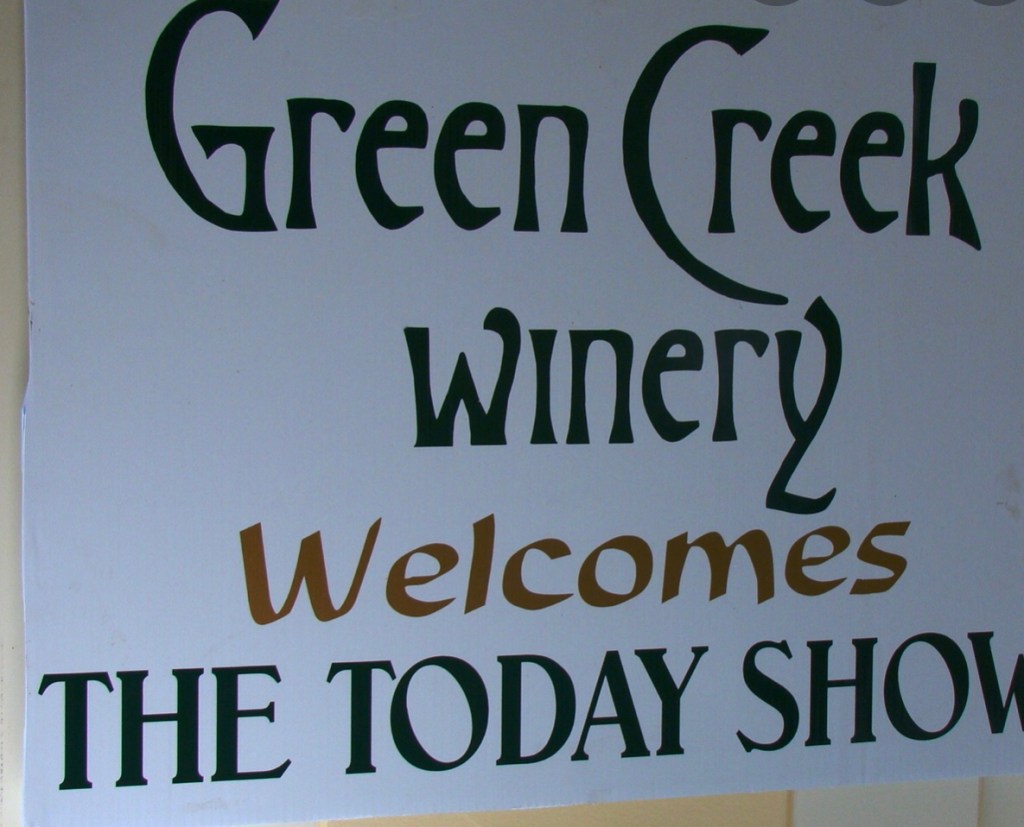
The Chardonnay Rosso received a lot of local press and incredibly much national attention from Wine Enthusiasts magazine and also national television coverage from The Today Show! Stories about the red Chardonnay appeared in six foreign newspapers including a paper published in Bordeaux.
A Blue Ridge Now News article stated that Pack sent a sample to the editor of Wine Enthusiasts, and the magazine’s staff held a blind tasting in their New York headquarters. The editor reported back to Pack that no one could identify the varietal of the wine. Now knowing what Pack already knew at the time, that response was certainly no surprise!
Wine Enthusiast magazine featured an article on the Chardonnay Rosso in it’s March, 2007 edition.
The wine was bottled and released in April of 2007.
Approximately 150 cases were produced and each bottle sold for $22.
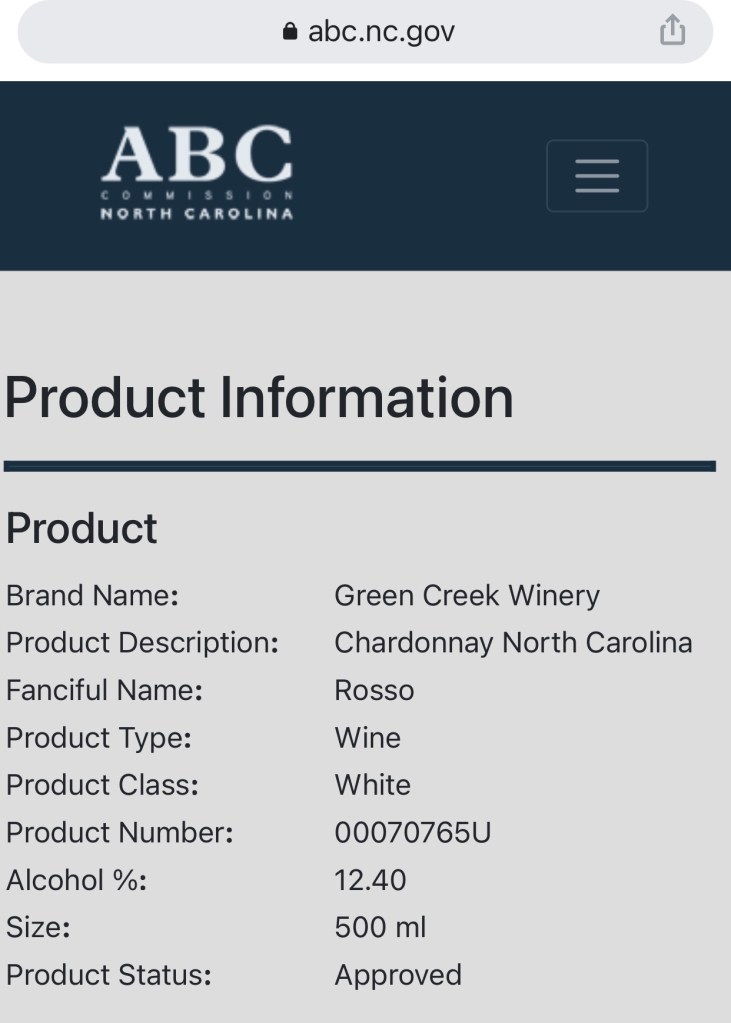
Details on the North Carolina ABC website show the Chardonnay Rosso was approved to be labeled at 12.4% ABV.
Honestly it’s just an amazing story. One that needed to be told again!
Our research of Red Chardonnay led us to another story. Back in 2001, California winemaker David Gluckman blended Malbec with Chardonnay and labeled his blend as Red Chardonnay.
We must admit though, we feel Green Creek Winery created the only true Chardonnay Rosso!
We’ve a nice collection of some early produced North Carolina and other regional wines. However, not the fortune to have a bottle of the famed Chardonnay Rosso!
Anybody got one? We’d love to share a taste!
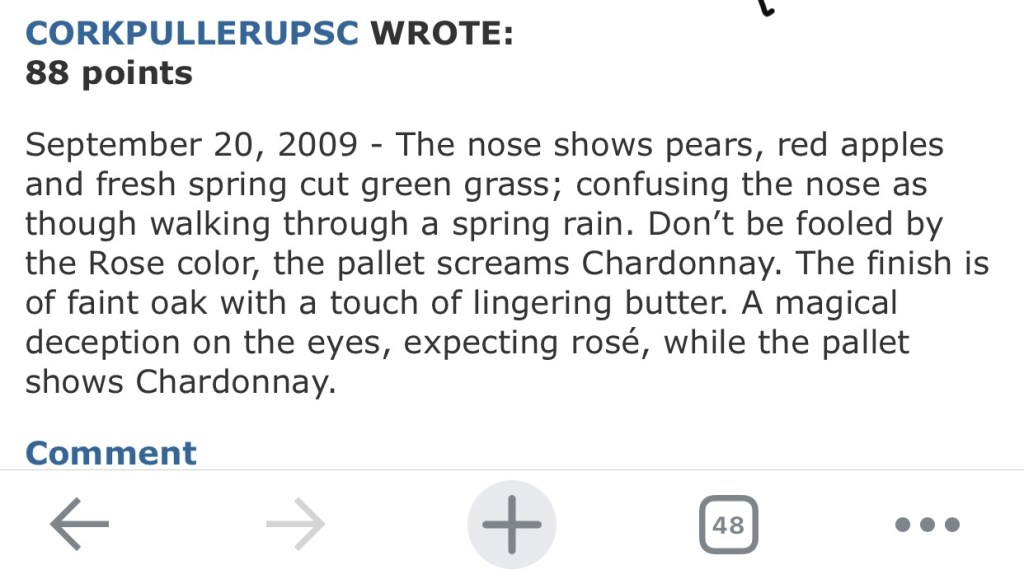
Much to our surprise, we did find a review on CellarTracker.Com of the 2007 Chardonnay Rosso.
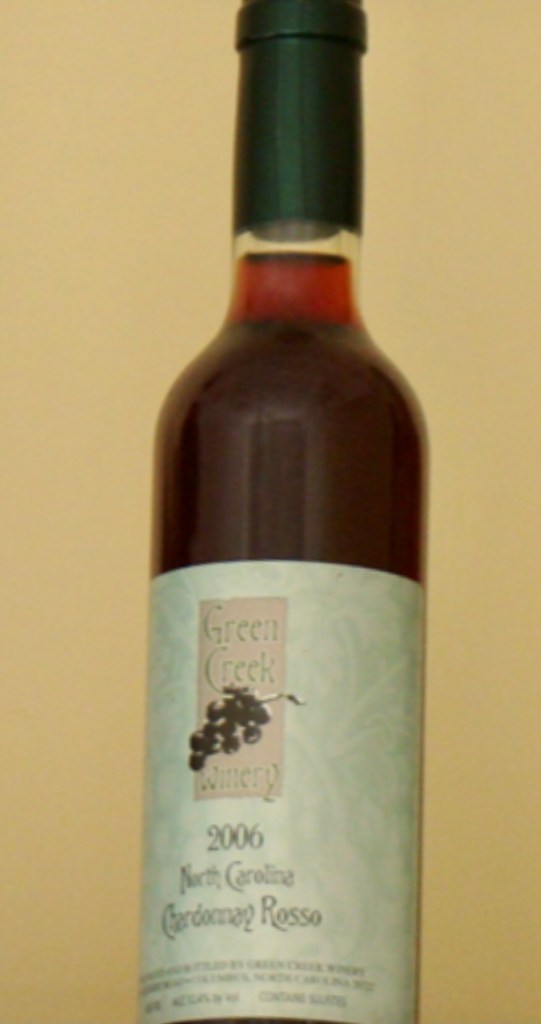
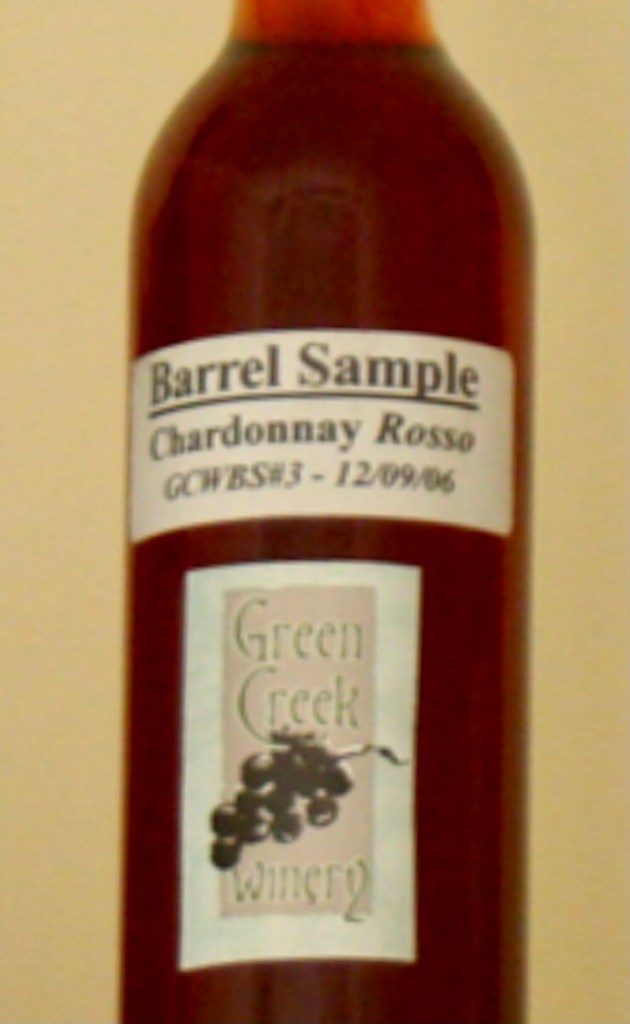
Continued research shows the Chardonnay Rosso first produced in 2006 and below is one picture we’ve uncovered.
Here’s to creative local winemakers! Here’s to Chardonnay Rosso! Cheers🍷🍷
As I formulate this writing in my mind, I feel it’s important to stress that I intend not to isolate, call out, nor pick on any one individual.
Though as I listened to the recap of the NC Wine Guys zoom presentation of Open That Bottle to kick-off NC Wine Month, this one thought continued to resound in my head.
It was the often mention of Virginia, on a live event intended to promote North Carolina wine! 🍷
Virginia! Virginia! Virginia!
There is nothing wrong with Virginia wine. We enjoy visiting wineries in Northern Virginia.
However, considering from a marketing mindset, does North Carolina wine want to emulate Virginia wine?
In all fairness, it is most certain that no one on the zoom call was really suggesting it. However, with similar certainty, a casual listener may have easily interpreted the comments to suggest just as such.
Plus, most certainly The NC Wine Guys promote #NCWine aggressively and effectively.
We’re just trying to think outside of the barrel so to speak!
To the point, I’d argue that the North Carolina wine industry is best served to chart its own path!
What is unique in regards to the North Carolina wine industry?
1. Six different American Viticulture Areas. Plus, several other wine growing areas which are likely to at some later time be recognized with an AVA designation. One such wine region being the Tryon Foothills.
The only states with more AVA’s are the big three on the West Coast, California, Oregon, and Washington. Texas with eight AVA’s. Two states on the East Coast, one being New York’s’ eleven designated AVA’s mostly in the Finger Lakes or Long Island. Then we have the neighbor, Virginia with eight designated AVA’s. Point being, North Carolina is not just one small fledgling wine region and doesn’t need to take a back seat to Virginia!!
2. North Carolina grows an amazingly diverse array of grape varietals and cultivars. Including traditional European Vinifera, French-American Hybrids, Muscadines, and other Native species.
Vinifera varietals range from the traditional Bordeaux (Cabernet Sauvignon, Merlot), to Italian (Montepluciano, Nebbiolo), to Greek (Assyrtiko, Aglianico).
French-American Hydrids such as Chambourcin, and Traminette!
Indeed, a wine for every taste!
3. The North Carolina wine industry is still in it’s infancy, yet a long storied history exists!
History like the story of “Tyron Grape” dating back to before prohibition!
North Carolina’s wine regions generally speaking, are indeed still developing. This fact needs to be presented as an opportunity for discovery by all wine lovers from all around and not only just North Carolina natives!
Therefore, this NC Wine Month we make a call to encourage all that appreciate good wine to explore North Carolina’s diverse, developing, ever expanding wine territory!
A naturally occurring cross varietal of Cabernet Franc and Sauvignon Blanc.
Black grape varietal originating from the South of France, notably the Left Bank of Bordeaux.
Notable for pronounced black fruit and herbaceous aromas and flavors.
Can produce outstanding wines that will age in the bottle for many, many years.
Requires moderate to warm climates, though the best vintages are produced in warmer climates that allow the fruit to fully ripen.
Underripe Cabernet Sauvignon fruit can produce more noticeable green aromas and flavor notes.
The best vintages are dry, deeply colored, full bodied, high in tannins and high in acidity.
Developments in winemaking the last decade have evolved to produce Cabernet Sauvignon wines higher in alcohol.
Important regions include Bordeaux France, Left Bank including areas Médoc AOC, and Haut-Médoc AOC, plus Margaux AOC, Pauillac AOC, and Graves AOC. Cabernet Sauvignon likewise can thrive in the warmer vineyards of the South of France.
In California, Napa Valley and Sonoma are known to produce high quality vintages. The Napa Valley stands out with its warm, sunny climate and long growing season. Noteworthy are the Napa sub-regions of Oakville, Rutherford, and Calistoga.
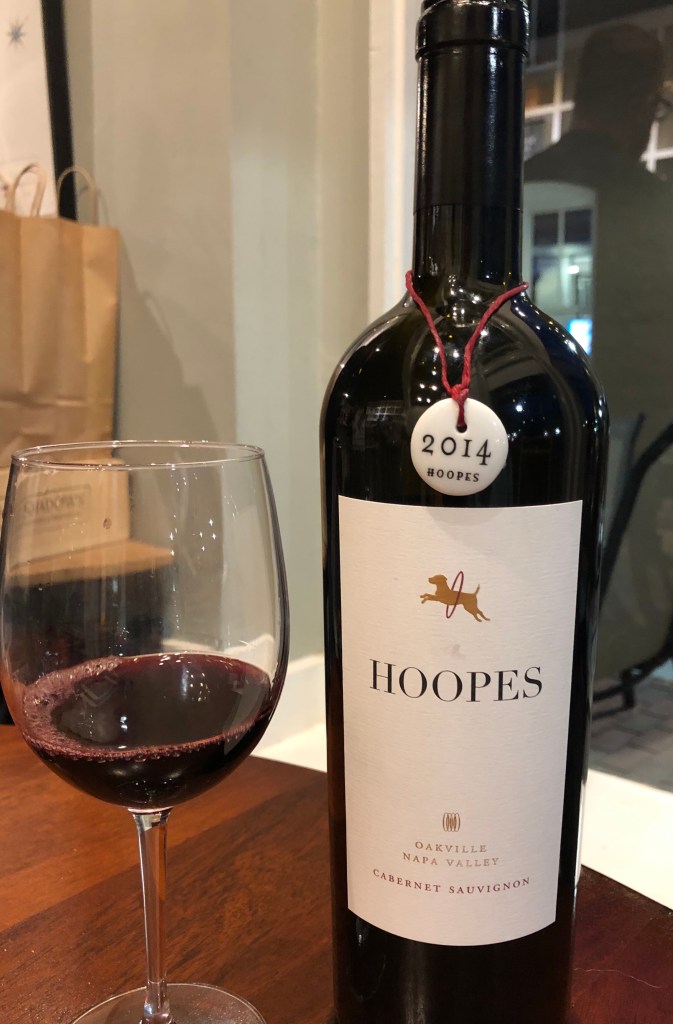
Hoopes 2014
In Chili, the Central Valley, Colchagua Valley, and Maipo Valley are the noteable producing regions. Stollenbosch is a high quality region in South Africa.
In Australia we look at the Margaret River and Coonawarra regions.
In more moderate climates, Cabernet Sauvignon is often used in blends, such as in Bordeaux, California Meritage blends, and in the South Africa Cape Blends.
Our assessment for what it’s worth, is that the best vintages come from the Napa Valley, and the best blends from Bordeaux.
Above stated, some really good Cabernet Sauvignon wines can be found in other regions. However, we find these to be very vintage specific. That is to say, only in the best growing years, when Mother Nature is most cooperative, will these regions produce very good quality Cabernet Sauvignon!
Piccione Vineyards
As a self-confessed Cab Sauv Snob, we are often asked what is our favorite reasonably priced Cabernet Sauvignon. Anatomy 101 fits that bill perfectly.
Anatomy 101
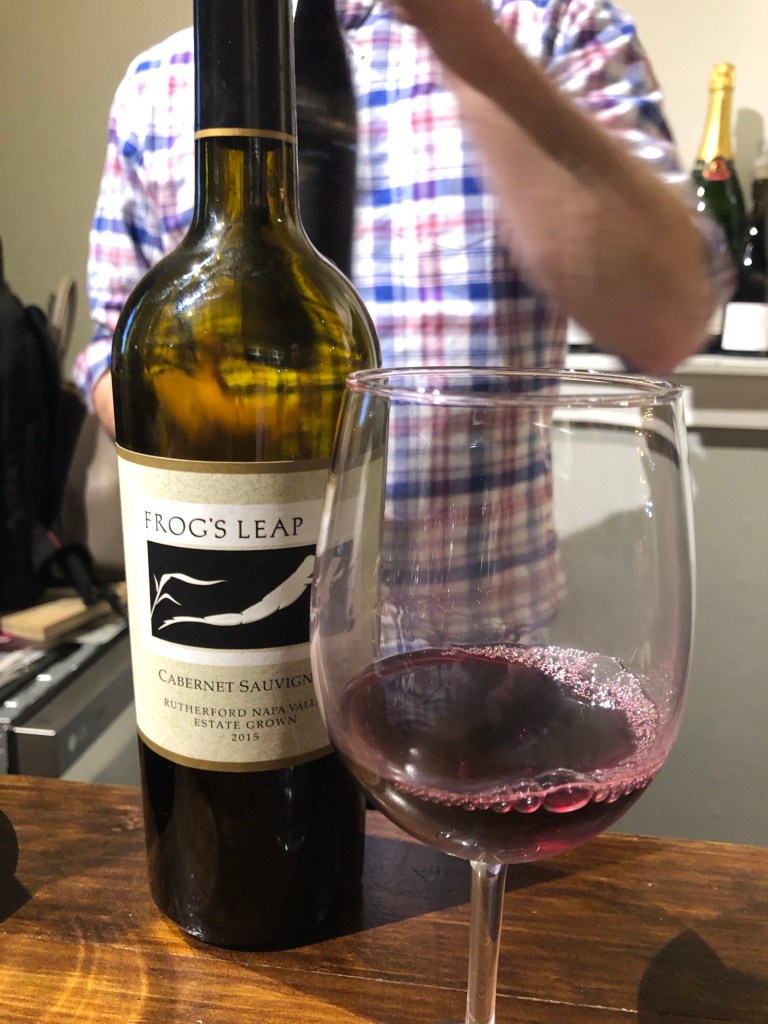
Which Cab Sauv is our “current” favorite? Frog’s Leap Estate Grown Rutherford Napa Valley never disappoints!















 Wine Competitions and Marketing!